Discover 25 incredible and surprising facts about Quetta Pakistan's highest city the Fruit Garden of Pakistan and Balochistan's cultural capital. Everything you need to know about Quetta in 2026.
Quetta the capital of Balochistan is one of Pakistan's most unique, underrated, and breathtaking cities. Surrounded by four towering mountain ranges, blessed with fruit filled valleys, and home to a vibrant mix of cultures, Quetta is a city unlike any other in Pakistan. Whether you are a local proud of your roots or a visitor planning your first trip, here are 25 amazing facts about Quetta that will genuinely surprise you.
From its ancient name meaning fortress to producing nearly 30% of Pakistan's total apple supply, Quetta's story is rich, layered, and deeply fascinating. This complete Quetta city guide covers Quetta's history, geography, culture, food, and records all in one place.
Quetta Geography Pakistan's Highest Major City
Fact 1 Quetta Sits at 1,680 Meters Above Sea Level
Quetta is situated at an elevation of approximately 1,680 meters (5,510 feet) above sea level, making it the highest major city in all of Pakistan. No other major Pakistani city reaches this altitude, giving Quetta cold snowy winters and refreshingly cool summers compared to the rest of the country.
Fact 2 Four Mountains Surround Quetta Like a Fortress
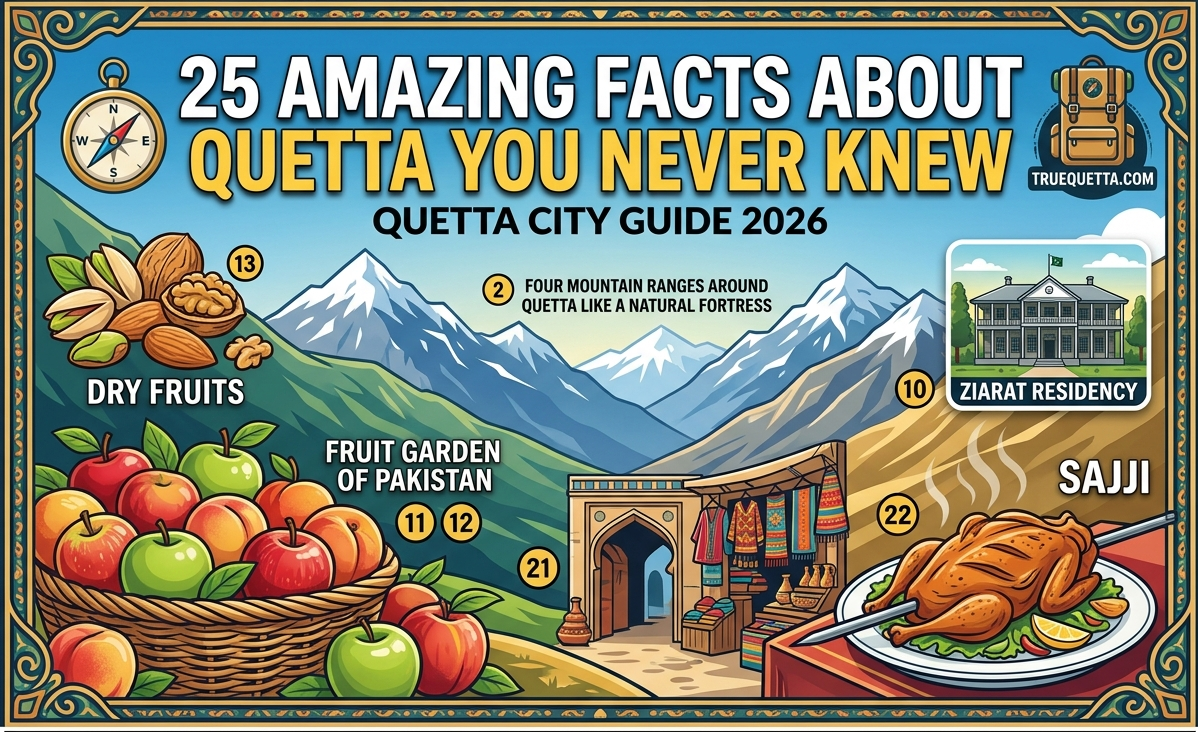
Quetta is encircled by four imposing mountain ranges Chiltan, Takatu, Zarghoon, and Murdaar. These mountains create a natural fortress around the city and are the reason behind its name. They also provide Quetta with its distinct climate, scenic landscapes, and a dramatic backdrop visible from almost every point in the city.
Fact 3 Quetta Means Fortress in Pashto
The name Quetta is derived from the Pashto word Kwat Kot, meaning fortress. The city is also known by its ancient name Shal or Shalkot among older generations and in historical texts. The name is a direct reference to the surrounding mountain walls that guard the valley.
Fact 4 Quetta is a Gateway Between Three Countries
Quetta sits near the borders of both Afghanistan and Iran, making it one of the most strategically important cities in South Asia. The famous Bolan Pass once the only overland gateway from Central Asia into South Asia runs through this region and has shaped Quetta's history for thousands of years.
Fact 5 Quetta is the Capital of Pakistan's Largest Province
Quetta is the capital of Balochistan, which is Pakistan's largest province by land area covering approximately 347,190 square kilometers, or nearly 44% of Pakistan's total landmass. Despite this, Balochistan is the least densely populated province, making Quetta an even more vital administrative and economic hub.
Quetta History From Ancient Fortress to Modern Capital
Fact 6 Quetta Was a British Military Station Since 1876
Quetta was occupied by the British in 1876 and rapidly developed into one of the most important military stations on the northwest frontier of British India. A residency was founded by Robert Sandeman, and the town grew around a heavily garrisoned army post. The famous Army Command and Staff College was opened here in 1907 and still operates as one of Asia's most prestigious military academies.
Fact 7 The Catastrophic 1935 Quetta Earthquake
A devastating earthquake struck Quetta in May 1935, killing over 20,000 people and destroying most of the city within minutes. The 1935 Quetta earthquake was one of the deadliest in South Asian history and almost entirely levelled the British built infrastructure. The Quetta that exists today was largely rebuilt after this disaster, which is why much of the city's architecture dates from the mid 20th century.
Fact 8 Quetta Was Called the Little Paris of Asia
During the British era, Quetta's wide tree lined boulevards, elegant colonial architecture, clean streets, and cosmopolitan culture earned it the nickname Little Paris of Asia. The grand Shahrah e Zarghun boulevard and Jinnah Road still carry echoes of that refined colonial character, with historic buildings lining both sides.
Fact 9 Quetta's Population Grew from 11,000 to 1.5 Million
In 1891, Quetta had a recorded population of just 11,000 people. Today it stands at over 1.5 million according to the 2023 Pakistan Census a growth of more than 13,000% in 130 years, making it one of the fastest growing cities in the history of South Asia.
Fact 10 Quaid e Azam Spent His Final Days Near Quetta
The founder of Pakistan, Muhammad Ali Jinnah, spent the last months of his life at the Ziarat Residency a beautiful wooden building located just 130 km from Quetta, built in 1892 during the British Raj. Now a national heritage site and museum, the Ziarat Residency remains one of the most visited historical landmarks in all of Balochistan. Visiting Ziarat is among the top things to do near Quetta.
Quetta The Fruit Garden of Pakistan
Fact 11 Quetta Produces 30% of Pakistan's Total Apple Supply
Quetta is officially known as the Fruit Garden of Pakistan and the numbers prove it. The city and its surrounding valleys produce over 20 varieties of apples and account for nearly 30% of Pakistan's total apple production. From golden delicious to red delicious and local varieties, Quetta's apples are exported across the country and abroad.
Fact 12 Urak Valley is the Land of Orchards
Located just 22 km from Quetta, Urak Valley is one of the most scenic and photographed destinations in Balochistan. Both sides of its road are lined with wild rose bushes and fruit orchards overflowing with peaches, plums, apricots, cherries, and various apple varieties. It is a must visit destination for anyone exploring Quetta and surrounding areas.
Fact 13 Fruits and Dry Fruits Are Quetta's Pride
Beyond fresh fruit, Quetta is nationally famous for its world class dry fruits and nuts including premium almonds, pistachios, walnuts, pine nuts, raisins, and saffron. The city's Kandahari Bazaar is packed with these products sourced from local orchards and neighboring Afghanistan. Quetta dry fruits are considered among the finest quality available in all of Asia.
Fact 14 Pishin Valley Adds to the Orchards
North of Quetta lies the fertile Pishin Valley, another major fruit producing region famous for its apple orchards, pomegranate fields, and agricultural scenery. Visitors can experience apple picking directly from trees during harvest season, making it a unique agro tourism experience available near Quetta.
Quetta Natural Attractions and Tourism
Fact 15 Hanna Lake Was Built in 1894
Hanna Lake Quetta, the most iconic tourist destination in the city, was constructed in 1894 alongside a reservoir that supplies water to parts of Quetta. Its crystal blue water, golden fish, surrounding green hills, and boating facilities attract thousands of visitors every week. The nearby Hayat Durrani Water Sports Academy is the only water sports training facility in all of Balochistan.
Fact 16 Hazarganji Chiltan National Park Protects a Rare Species
Located just 20 km southwest of Quetta, Hazarganji Chiltan National Park was established in 1980 specifically to protect the rare Chiltan Ibex a wild mountain goat found nowhere else on earth. The park is also home to leopards, wolves, markhors, and hundreds of plant species. It is one of Pakistan's most ecologically significant protected areas to visit near Quetta.
Fact 17 Quetta Has an Ancient Underground Irrigation System
Quetta and its surrounding areas still rely on an ancient underground irrigation system called the Karez a Persian origin technology over 2,000 years old that channels underground water from mountain sources to fields and settlements without any electricity or mechanical pumps. Several functional Karez systems still operate across Quetta and Balochistan today.
Quetta Culture and People
Fact 18 Four Major Ethnic Communities Call Quetta Home
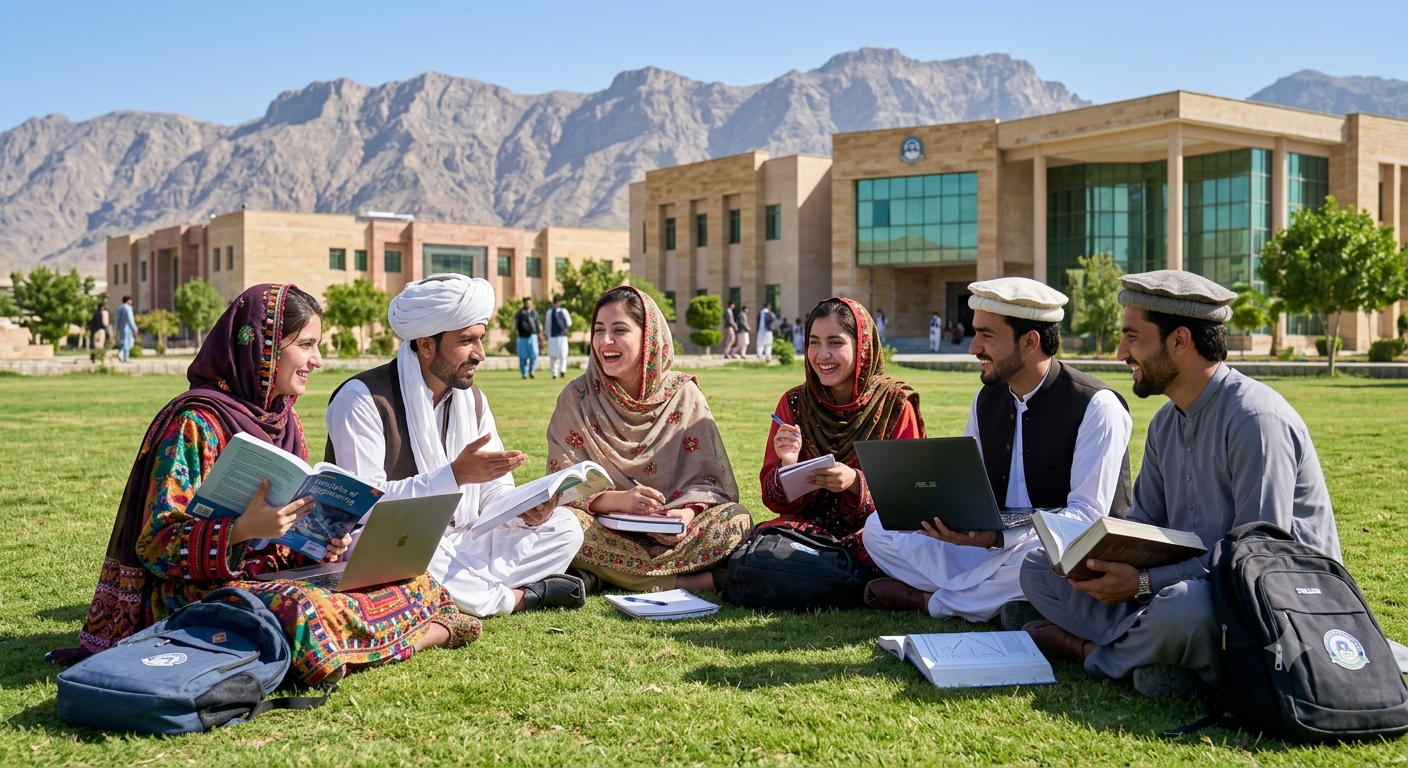
Quetta is home to one of the most culturally diverse populations in Pakistan. The city's four major communities Pashtuns, Baloch, Hazaras, and Brahuis live alongside Punjabis, Muhajirs, and others in the same valley. This unique diversity means that Quetta's food, language, music, and traditions carry influences from across Central Asia, South Asia, and the Middle East.
Fact 19 Over 500,000 Hazaras Live in Quetta
Quetta is home to one of the largest Hazara communities outside of Afghanistan, with an estimated 500,000 to 600,000 Hazaras living in and around the city. This makes Quetta a globally significant cultural and historical center for the Hazara people, with their own distinct cuisine, language, crafts, and traditions enriching Quetta's cultural identity.
Fact 20 Five Languages Are Spoken in Quetta Bazaars
Walk through any bazaar in Quetta and you will hear Pashto, Balochi, Brahui, Hazaragi, and Urdu all within the same street. This multilingual character makes Quetta one of the most linguistically rich and culturally layered cities in Pakistan, offering a remarkable human tapestry that few cities in the world can match.
Fact 21 Quetta Bazaars Are World Famous for Handicrafts
Quetta's traditional bazaars particularly Liaquat Bazaar, Suraj Ganj Bazaar, and Kandahari Bazaar are renowned for handmade Balochi embroidered dresses, hand woven carpets, marble and onyx products, mirror work, and traditional jewelry. These crafts carry centuries of artistic heritage and are exported to buyers worldwide. A visit to these bazaars is among the most authentic experiences available in Quetta.
Quetta Food Scene
Fact 22 Sajji is Quetta's Most Famous Dish
Sajji whole lamb or chicken roasted slowly over an open fire with minimal spices originated in Balochistan and is most authentically prepared and served in Quetta. It remains the city's most iconic and internationally recognized dish. Restaurants like Lehri Sajji House in Quetta are legendary destinations for sajji lovers from across Pakistan.
Fact 23 Dumpukht is a Royal Quetta Specialty
Dumpukht meat cooked slowly inside a sealed pot in its own steam and juices is a Quetta culinary tradition that traces its roots to ancient Persian and Mughal royal cooking techniques. The result is extraordinarily tender, aromatic meat that cannot be replicated by any other cooking method. Dumpukht remains one of the most sought after dishes when visiting Quetta.
Fact 24 Quetta Has a Thriving Continental Food Scene
Beyond traditional Balochi cuisine, Quetta also has a growing modern food scene that surprises many first time visitors. Restaurants like Saigon Cafe Restaurant and Ten Eleven Continental serve Italian pasta, steaks, seafood, Chinese dishes, and specialty mocktails all within Quetta, proving the city's culinary diversity goes far beyond sajji and karahi.
Quetta Records and Firsts
Fact 25 Quetta Grew from a Mud Fort to a City of 1.5 Million
In 1828, the first westerner to visit Quetta described it as nothing more than a mud walled fort surrounded by approximately three hundred mud houses. Today, according to the 2023 Pakistan Census, Quetta's population stands at 1,565,546 making it the largest city in Balochistan, the ninth largest in Pakistan, and one of the most dramatic urban growth stories in South Asian history.
Frequently Asked Questions About Quetta
Why is Quetta called the Fruit Garden of Pakistan?
Quetta is called the Fruit Garden of Pakistan because it produces over 20 varieties of apples and accounts for nearly 30% of Pakistan's total apple production. Surrounding valleys like Urak and Pishin are filled with orchards of peaches, plums, apricots, pomegranates, and grapes, making the region one of the most productive fruit growing areas in all of South Asia.
What is the population of Quetta in 2026?
The 2023 Pakistan Census recorded Quetta's official population at 1,565,546. UN urbanization estimates place the Quetta 2026 population figure at approximately 1,285,000 for the metro area. Quetta is the largest city in Balochistan and consistently ranks among Pakistan's top ten most populous cities.
What does the name Quetta mean?
The name Quetta comes from the Pashto word Kwat Kot meaning fortress. The city is also known by its ancient local name Shal or Shalkot. The name reflects the four mountain ranges that surround the city and once served as natural defensive walls.
How high is Quetta above sea level?
Quetta sits at approximately 1,680 meters (5,510 feet) above sea level, making it Pakistan's highest major city. This elevation gives the city cold snowy winters and pleasant summers, making it a popular escape from Pakistan's intense summer heat.
What is Quetta most famous for?
Quetta is most famous for its fruit orchards and dry fruits, Balochi Sajji, Hanna Lake, Urak Valley, the Quaid e Azam Residency in Ziarat, colorful traditional bazaars, its unique multicultural population, and its dramatic mountain scenery. It is also historically known as the Little Paris of Asia.
Explore More of Quetta with TrueQuetta.com
These 25 facts are just the beginning of what makes Quetta one of Pakistan's most remarkable cities. Whether you are planning a visit, researching the city, or simply proud of your roots, Quetta's history, culture, food, and nature offer something genuinely extraordinary at every turn.
For the most complete and updated guides to restaurants in Quetta, top places to visit, hotels, and local experiences, visit TrueQuetta.com your trusted local guide to everything Quetta.