A complete, location-by-location breakdown of the January 31, 2026 coordinated attacks carried out by the Balochistan Liberation Army (BLA) across Balochistan, including Quetta, Gwadar, Mastung, Nushki and coastal regions.
On January 31, 2026, Balochistan witnessed one of the most widespread and coordinated waves of militant violence in recent years. The Balochistan Liberation Army (BLA), a banned separatist organization, claimed responsibility for a province-wide operation targeting security forces, state infrastructure, and key installations across multiple cities and towns.
The attacks unfolded almost simultaneously across urban centers, remote districts, and coastal regions, creating widespread disruption and prompting a large-scale security response. Below is a detailed, city-by-city and event-by-event breakdown based on official statements, major media reporting, and verified local accounts.
Overview of the Coordinated Assaults
According to Pakistani authorities and major news outlets, attacks were reported in Quetta, Gwadar, Mastung, Nushki, Dalbandin, Kharan, Panjgur, Tump, and Pasni. The BLA described the operation as the second phase of its so-called campaign and claimed simultaneous strikes at numerous locations.
The assaults included gun attacks, explosions, arson, and suicide-style (fidayeen) assaults primarily targeting security personnel, law enforcement facilities, and military-linked infrastructure.
Casualties and Damage
Official figures reported that security personnel and civilians were killed and injured across different districts. Women, children, laborers, and local residents were among the civilian victims in some affected areas. Security forces stated that dozens of militants were killed during counter-operations, though figures varied between early and later reports.
Material damage included:
- Police and security vehicles burned
- Damage to railway infrastructure leading to train suspensions
- Attacks on security compounds and checkpoints
- Reports of bank robberies and government facility damage in some districts
Detailed Focus: Quetta
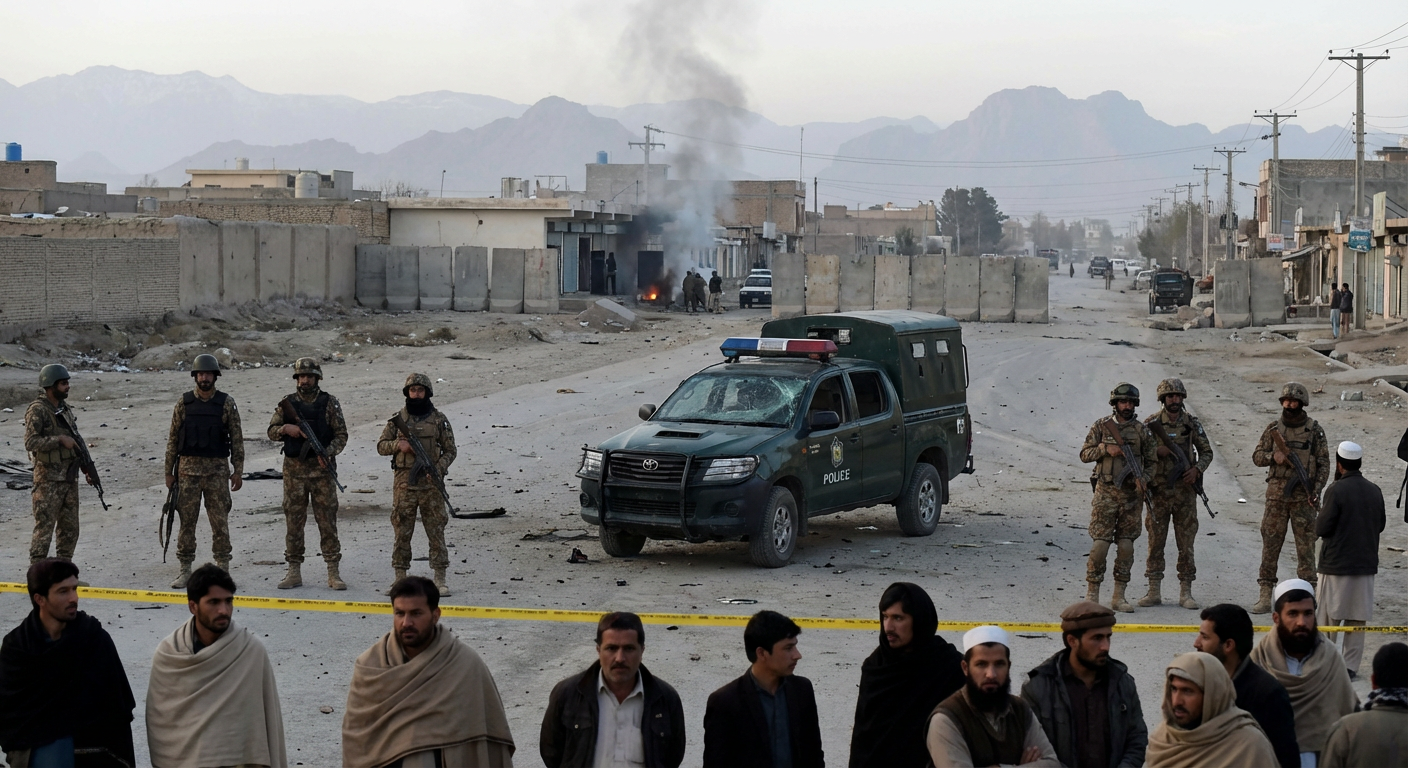
The provincial capital Quetta was among the first cities hit. Around 6:00 AM on Sariab Road, militants reportedly attacked a police mobile van. Two police personnel were killed, and the vehicle was set on fire. Residents described hearing an initial explosion followed by prolonged gunfire.
Security officials stated that militants attempted to create panic and possibly move deeper into the city, but security forces quickly responded, preventing further expansion of the assault. Clearance operations continued in surrounding areas, and movement in parts of the city was temporarily restricted due to security sweeps.
Mastung: Prison and Security Targets
In Mastung, one of the most serious incidents involved an attack on a district jail facility. Armed militants reportedly stormed the area using gunfire and explosions. There were claims that several prisoners escaped during the chaos, though the exact number remained under investigation.
Reports also indicated an assault on security-related offices in the district. Authorities later said they were assessing whether any inmates were specifically targeted or if the prison break was intended to create general disorder.
Nushki and Dalbandin
In Nushki, attackers targeted a Frontier Corps (FC) headquarters, with local residents describing hours of continuous gunfire and explosions. Security forces eventually regained control after an extended exchange.
Dalbandin also experienced early morning blasts and gunfire. Media reports suggested a suicide-style assault on a security camp, while residents confirmed hearing multiple explosions at the start of the day.
Gwadar, Pasni, and Coastal Belt
Along the coast, Gwadar, Pasni, and Tump were listed among the affected areas. Attacks reportedly targeted security and intelligence-linked facilities. Disruptions were also reported on parts of the coastal highway, affecting movement and logistics in the region.
Kharan and Panjgur
Authorities confirmed attacks in Kharan and Panjgur, though detailed site-specific information remained limited in early reporting. These incidents were described as part of the broader coordinated wave designed to stretch security forces across multiple districts.
Infrastructure and Transport Disruptions
Pakistan Railways suspended several services after railway tracks were reportedly sabotaged. Trains including routes from Quetta toward other major cities were halted as a precaution. Road travel in certain districts was also restricted during ongoing clearance operations.
Sequence of Events
Available reports suggest the following pattern:
- Early morning: First major incident in Quetta (Sariab Road)
- Shortly after: Explosions and gunfire reported in Dalbandin, Nushki, and Mastung
- Later phases: Attacks spread to Gwadar, Pasni, Tump, Kharan, and Panjgur
This multi-location approach appeared designed to overwhelm local response capacity and create maximum disruption across the province.
Who Claimed Responsibility
The Balochistan Liberation Army (BLA) claimed responsibility through statements attributed to its spokesperson. The group described the operation as a coordinated campaign against what it called state security structures. Some of its claims about the scale of control and damage differed from official accounts.
Government and Military Response
Pakistan’s military media wing stated that security forces responded rapidly, repelled attackers at multiple sites, and launched clearance operations. Political leaders praised the security forces and vowed to pursue those responsible. Investigations were launched to identify planners, facilitators, and support networks.
Impact on Daily Life
The attacks led to temporary transport shutdowns, heightened security checks, and fear among local residents. Business activity slowed in several towns, and movement was restricted during security operations. Although no province-wide curfew was officially declared, conditions in some districts resembled a lockdown during the immediate aftermath.
Ongoing Investigation
Authorities reported that intelligence agencies were examining communication links and cross-border support allegations. Clearance and search operations continued in multiple districts in the days following the attacks.
Background: The BLA Insurgency
The BLA is a separatist militant organization that has carried out attacks in Balochistan for years, often targeting security forces and state-linked infrastructure. The January 31, 2026 incidents fit into a broader pattern of insurgent activity in the province, which has long faced security challenges alongside economic and political tensions.
Conclusion
The January 31 coordinated assaults marked a significant escalation in militant activity across Balochistan, both in geographic spread and operational coordination. While security forces reported regaining control in all affected areas, the scale of the attacks highlighted the ongoing volatility of the security situation in the province.