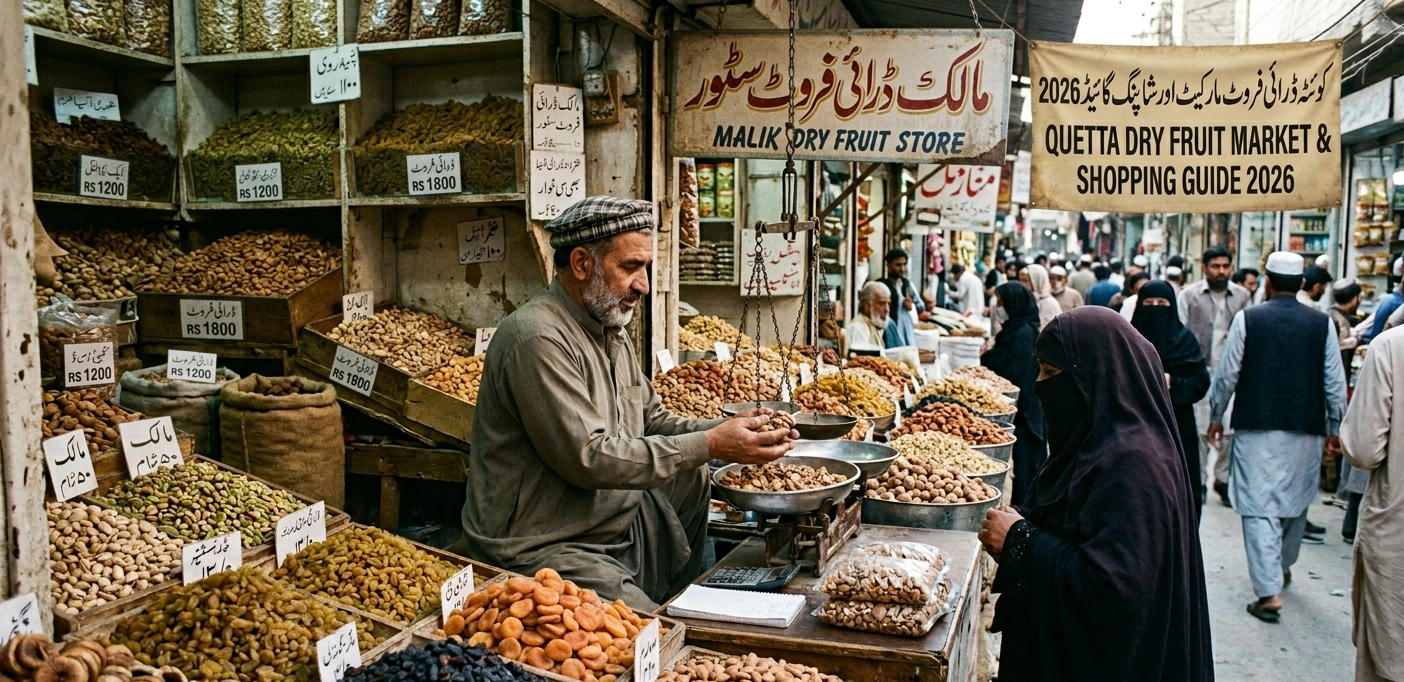
Your complete 2026 guide to Quetta dry fruits market. Discover where to buy the best dry fruits in Quetta, current prices of almonds, walnuts, pistachios, apricots, and raisins, best shopping areas, and insider tips for getting authentic quality.
Quetta is known across Pakistan and beyond as the Fruit Garden of Pakistan and with good reason. Surrounded by some of the most productive orchards in the country, Quetta produces and trades in a remarkable variety of fresh and dried fruits that are exported nationwide and internationally. If you are visiting Quetta, shopping for dry fruits is not just a tradition it is an experience that defines the city.
This complete 2026 guide covers the best dry fruit markets and shops in Quetta, current price ranges, what to buy, how to identify quality, and insider tips to get the most from your Quetta dry fruit shopping experience.
Why Quetta Dry Fruits Are Special
Quetta's surrounding regions particularly the valleys of Pishin, Ziarat, Mastung, and Khuzdar are home to vast orchards that produce apples, pomegranates, apricots, grapes, almonds, and walnuts in abundance. The high altitude, cool climate, and fertile soil of Balochistan produce fruit and nuts with a superior flavor profile compared to those grown in hotter, lower altitude regions.
Quetta dry fruits are considered premium quality in markets across Pakistan. They are bought in bulk by traders from Karachi, Lahore, and Islamabad because of their superior taste and freshness. Buying directly from Quetta means you are getting the product closer to its source which means better quality and lower prices than you would find elsewhere.
Best Dry Fruit Markets in Quetta
1. Liaquat Bazaar The Heart of Quetta's Dry Fruit Trade
Liaquat Bazaar is Quetta's most famous and busiest traditional market. It is the central hub for dry fruit trading and shopping in the city. The bazaar stretches along a busy main road and is lined with shops piled high with sacks and display cases full of almonds, walnuts, pistachios, raisins, dried apricots, figs, and much more.
This is the place where wholesale buyers, local traders, and individual shoppers all come to find the widest selection and the most competitive prices in Quetta. Bargaining is expected and prices are generally much lower here than in packaged supermarket dry fruits.
- Best for: All types of dry fruits, bulk buying, best prices
- Timing: Mornings and afternoons are best evenings can get very crowded
- Tip: Visit multiple shops and compare before buying
2. Suraj Ganj Bazaar Traditional Shopping with Local Character
Suraj Ganj Bazaar is another of Quetta's iconic traditional markets known for a mix of dry fruits, spices, handicrafts, and local fabrics. This bazaar has a more traditional feel than Liaquat Bazaar and is slightly less crowded, making it a more relaxed shopping experience.
Many shops here have been run by the same families for generations. The shop owners are knowledgeable about their produce and can tell you which region specific nuts and fruits come from, which is a good sign of authenticity and pride in quality.
- Best for: Mixed shopping, handicrafts, spices alongside dry fruits
- Timing: Morning hours, 9 AM to 12 PM, are the most pleasant
- Tip: Ask shopkeepers about the harvest season for specific fruits
3. Kandhari Bazaar Street Shopping and Local Atmosphere
Kandhari Bazaar is one of Quetta's oldest and most authentic markets. While primarily known for general goods and street food, it also has numerous dry fruit stalls where you can find local seasonal dried fruits at street prices. The atmosphere here is raw, busy, and genuinely local.
During winter months, dry fruit stalls in Kandhari Bazaar are particularly well stocked as fresh harvest from Balochistan's orchards arrives in the city.
4. Modern Dry Fruit Shops Packaged and Premium Options
For visitors who prefer packaged, weighed, and labeled dry fruits, several modern dry fruit shops have opened in Quetta in recent years, particularly along Zarghoon Road, Jinnah Road, and the areas around Quetta's main commercial districts. These shops offer:
- Hygienically packaged dry fruits
- Fixed pricing with no need to negotiate
- A wider range including imported dry fruits alongside local Balochi produce
- Gift packaging options ideal for travel or gifting
What to Buy Best Quetta Dry Fruits in 2026
Walnuts (Akhrot)
Quetta and Balochistan are among Pakistan's top walnut producing regions. Balochi walnuts are large, fresh, and have a superior flavor compared to imported alternatives. Available shelled or unshelled, they are one of the best purchases you can make in Quetta.
Almonds (Badam)
Locally grown almonds from Balochistan are sweet, thin skinned, and noticeably different from the harder, blander almonds often sold in cities. Both raw and roasted varieties are available. Quetta almonds are particularly prized for their fresh, natural flavor.
Pistachios (Pista)
Balochistan produces some of the finest pistachios in Pakistan. Quetta markets sell both raw and salted pistachios, and the local variety is widely considered superior in taste to imported pistachio products.
Dried Apricots (Khubani)
Dried apricots from Balochistan particularly from Ziarat and the surrounding valleys are naturally sun dried and have an intense, sweet tart flavor. Unlike commercially processed apricots, Quetta dried apricots are often unsulfured and preservative free.
Raisins (Kishmish)
Multiple varieties of raisins are available in Quetta markets, ranging from small seedless varieties to larger, plumper types. Balochistan and neighboring regions are major grape producers, making Quetta one of the best places in Pakistan to buy authentic, freshly dried raisins.
Dried Figs (Anjeer)
Dried figs are a specialty product in Quetta markets. They are naturally sweet and are used in both traditional medicine and everyday snacking. Quality dried figs in Quetta are plump and soft with a rich, honey like flavor.
Pine Nuts (Chilgoza)
Chilgoza pine nuts from Balochistan's forests are considered among the finest in Asia. They are expensive but deeply flavorful. Buying chilgoza in Quetta is significantly more affordable than purchasing them in Karachi or Lahore.
Dry Fruit Price Guide Quetta 2026
Prices vary based on quality, grade, and season. The following are approximate market price ranges as of 2026:
- Walnuts (Akhrot): PKR 1,200 to PKR 2,000 per kg
- Almonds (Badam): PKR 1,500 to PKR 2,500 per kg
- Pistachios (Pista): PKR 2,000 to PKR 3,500 per kg
- Dried Apricots (Khubani): PKR 600 to PKR 1,400 per kg
- Raisins (Kishmish): PKR 400 to PKR 900 per kg
- Dried Figs (Anjeer): PKR 800 to PKR 1,800 per kg
- Pine Nuts (Chilgoza): PKR 4,000 to PKR 7,000 per kg
- Mixed Dry Fruits: PKR 800 to PKR 2,000 per kg
Prices are significantly lower when buying in bulk quantities of 3 kg or more. Always ask for a discount when buying multiple kilograms.
How to Identify Quality Dry Fruits in Quetta
- Fresh smell: Quality dry fruits have a clean, natural aroma. Avoid any that smell musty or rancid.
- Appearance: Look for uniform color and plump, well formed pieces. Shriveled, discolored, or broken pieces indicate lower quality.
- Taste before buying: Reputable bazaar shops in Quetta always allow you to taste before purchasing. Always ask and never buy without tasting.
- Ask about harvest season: Freshly harvested nuts and dried fruits from the current or previous season are always superior. Ask when the stock arrived.
- Buy from established shops: Shops that have been operating in the same location for years are less likely to sell adulterated or stale products.
Best Time to Buy Dry Fruits in Quetta
The best time to shop for fresh dry fruits in Quetta is from October to December, when the autumn harvest from Balochistan's orchards arrives in the city markets. Prices are most competitive and stock is at its freshest during this period.
During Ramadan, demand for dry fruits increases significantly across Pakistan, which can push prices up. If you plan to buy in bulk, avoid shopping during the weeks just before Ramadan begins.
Practical Shopping Tips
- Carry cash: Most traditional bazaar shops in Quetta operate on a cash basis. Mobile payment options are limited in traditional markets.
- Bring your own bags: If you plan to buy in bulk, carry strong cloth or plastic bags to transport your purchases.
- Morning is best: Shop in the morning when shopkeepers are fresh, stock is fully displayed, and it is less crowded.
- Bargain respectfully: Negotiating price is a normal and expected part of bazaar shopping in Quetta. Be friendly and respectful in your approach.
- Buy from multiple shops: Visit at least 2 to 3 shops and compare prices and quality before making your final purchase.
Gifting Quetta Dry Fruits
Quetta dry fruits make exceptional gifts. Many modern dry fruit shops in Quetta offer attractive gift packaging with mixed assortments of almonds, pistachios, walnuts, raisins, and dried apricots. These make popular gifts for family, relatives, and colleagues when returning from a trip to Quetta.
Gift packages typically start from PKR 500 for small assortments and go up to PKR 5,000 or more for premium presentation boxes.
Final Thoughts
Shopping for dry fruits in Quetta is one of the most authentic, enjoyable, and valuable things you can do when visiting the city. The quality, variety, and prices available in Quetta's traditional bazaars cannot be matched anywhere else in Pakistan.
Whether you are filling your pantry with fresh walnuts and almonds, gifting a beautifully packaged assortment, or simply exploring the vibrant atmosphere of Liaquat Bazaar and Suraj Ganj, Quetta's dry fruit market experience is unforgettable.
For more guides to Quetta's food, markets, places, and culture, visit TrueQuetta.com.
Explore our full directory at Top Restaurants and our guide on the Beauty of Quetta for more Quetta inspiration.