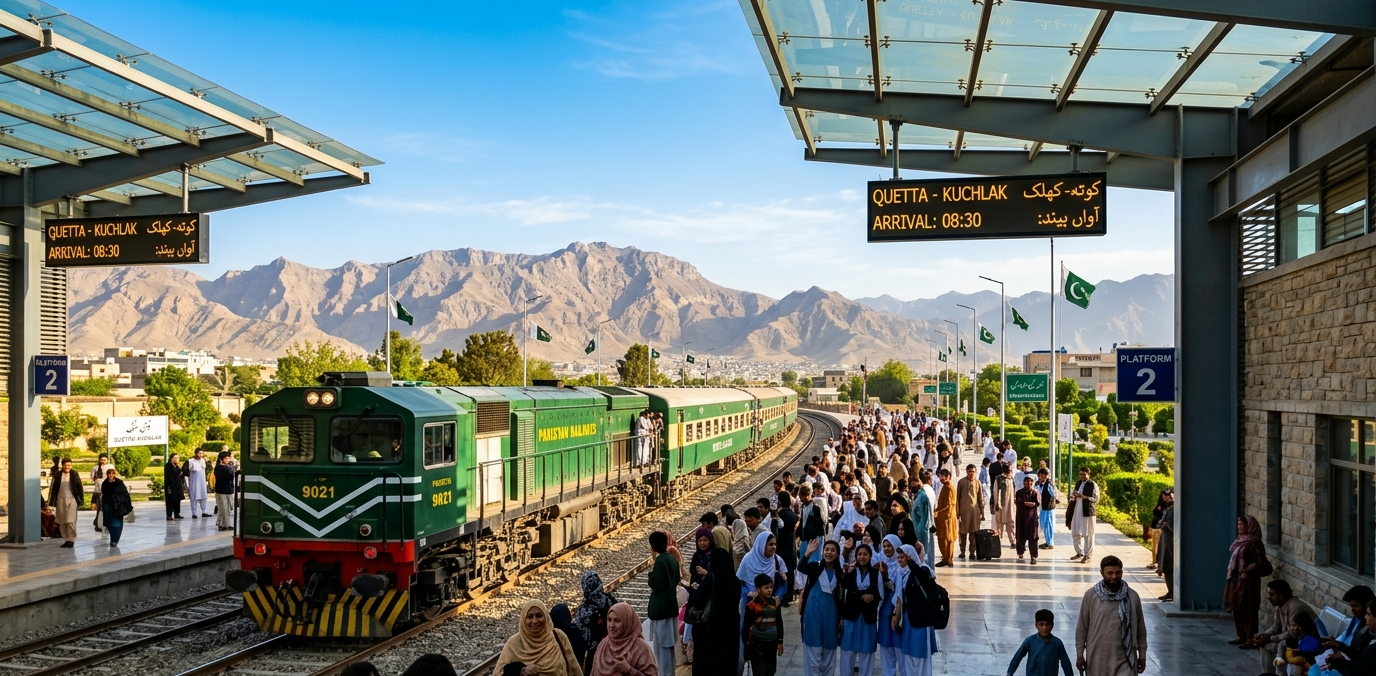
The complete 2026–2027 technical and local guide to the Rs1.4 billion Quetta People's Train Service (Sariab to Kuchlak). Explore infrastructure upgrades, ticket prices, schedules, and its impact on the local economy.
Public transportation within Balochistan is undergoing a historic shift as structural changes materialize. Following the rollout of the urban Green and Pink Bus services, the Government of Balochistan, operating in an expansive joint venture with Pakistan Railways, is preparing to formally operationalize the highly anticipated Quetta People's Train Service during the 2026–2027 fiscal cycle. Spanning a critical 32-kilometer mass transit corridor, this commuter system is engineered to provide an affordable, fast, and secure alternative for thousands of daily travelers navigating the provincial capital's dense traffic choke points.
The high-level planning framework was ironed out through strategic sessions held between Balochistan Chief Minister Mir Sarfraz Bugti and Federal Minister for Railways Hanif Abbasi. Rather than letting provincial transport initiatives depend solely on federal oversight, this project represents a prime example of administrative devolution. For localized, real-time coverage on this transit line and surrounding real estate developments, bookmark our main platform at TrueQuetta.
Financial Allocation and Project Scope (2026–2027)
The development of the local railway in Quetta has rapidly progressed from initial engineering evaluations to major capital investments. Chief Minister Sarfraz Bugti approved the allocation of Rs1.4 billion to actively fund the overhaul of heavy track infrastructure, ballast packing, signal modernization, and station building face-lifts across the urban network.
To maximize resource efficiency and guarantee rapid deployment for the 2026–2027 operational layout, the provincial administration explicitly rejected costly international rolling stock imports. Instead, the Balochistan government opted to procure locomotives, passenger cars, and dedicated engineering crews straight from the existing fleet of Pakistan Railways. This strategic decision drastically cuts down on external fiscal dependencies while pumping capital directly back into national transit infrastructure.
Additionally, this infrastructure push aligns with ongoing regional public transport initiatives. Alongside the train line, the administration has introduced a fleet of Green and Pink Buses—including specialized women-only transit lines managed by female conductors—to run coordinated feeder loops connecting peripheral neighborhoods directly to primary railway platforms.
The 32 KM Mass Transit Route: Sariab to Kuchlak
The core line of the Quetta People's Train Service stretches from the southern edge of the metropolitan area up to the suburban northern enclave of Kuchlak. This path cuts through the highest-density commercial zones, educational campuses, and administrative districts in the valley, pulling cars off congested arterial streets.
The updated 2026–2027 track alignment features five primary passenger hubs designed for high-volume foot traffic:
- Sariab Station: The southern terminus, tapping directly into a heavily populated student and working-class residential zone. This hub acts as the main loading dock for commuters moving northward.
- Quetta Central Station: The main metropolitan terminal, offering direct foot access to central commercial districts, administrative complexes, and historical municipal bazaars.
- Sheikhmanda Station: Positioned adjacent to developing commercial properties and light industrial sectors, catering heavily to the city’s labor force.
- Baleli Station: A crucial mid-route stop serving commuters along the bustling Baleli Road sector, bridging residential blocks with local commercial spaces.
- Kuchlak Station: The northern terminus of the transit line, anchoring a fast-growing suburban hub and easing long-distance highway travel into the city center.
Given the long-term master plan for 2027 and beyond, the provincial transport department is already exploring preliminary field surveys to extend this commuter service further south toward Mastung and northeast into Pishin.
Expected Commuter Impact: Fare, Safety, and Travel Times
The deployment of a local railway in Quetta addresses several major economic and logistical pressures currently squeezing local households:
- Drastic Travel Time Reduction: Commuting between Kuchlak and Sariab via local roads frequently takes upwards of an hour during peak morning gridlock. The dedicated rail corridor cuts this down to an estimated 25 to 30 minutes.
- Highly Subsidized Ticket Pricing: Operating under a "people-first" economic model, fare tracking confirms the government will subsidize ticket costs. This makes the rail service significantly cheaper than using private auto-rickshaws or local transport minivans.
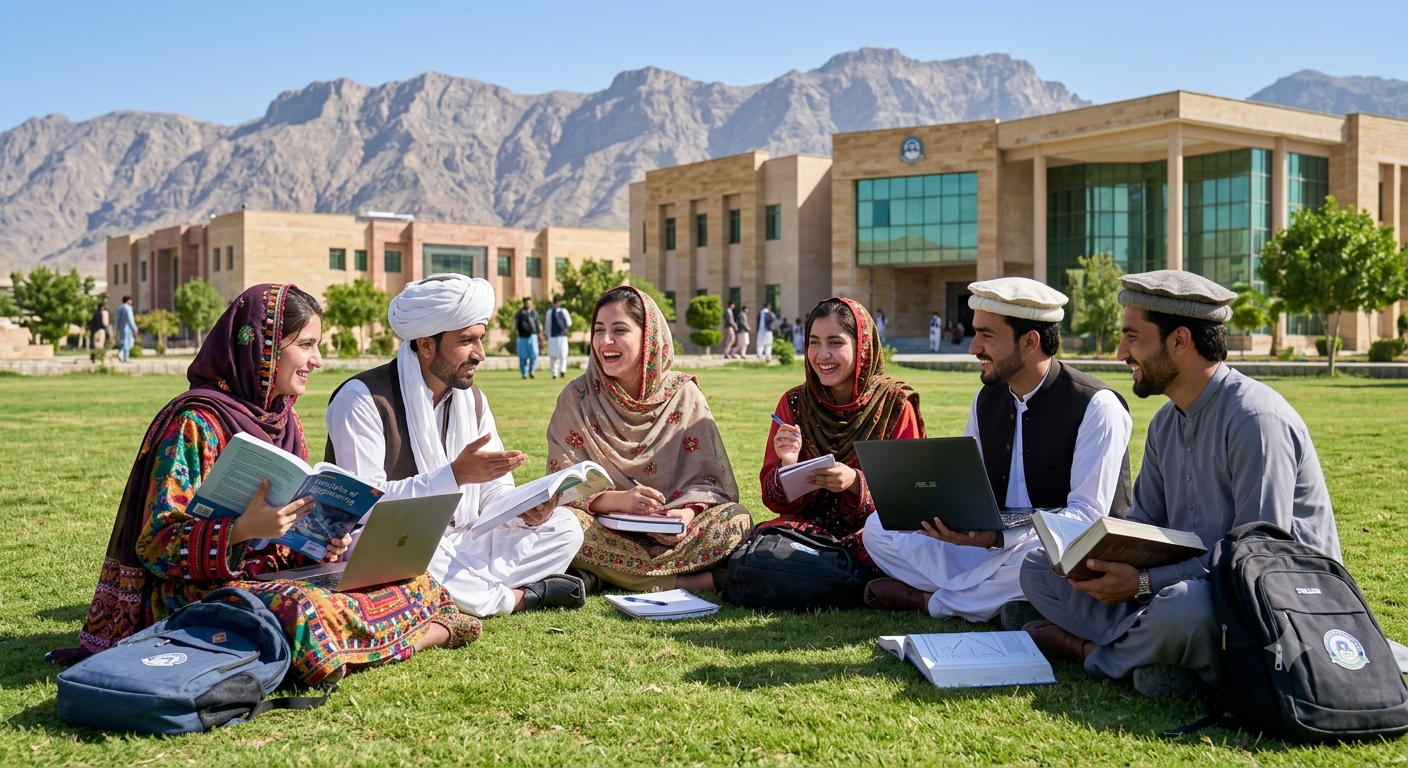
- Enhanced Commuter Security: Stations are being equipped with modern ticketing stalls, upgraded platforms, and dedicated security units. These upgrades prioritize safe travel environments for female students, families, and everyday commuters.
Socio-Economic Development and Youth Welfare
Beyond simply laying tracks, the partnership between the provincial executive and Pakistan Railways is leveraging underutilized railway lands to spark wider social development. Chief Minister Bugti and Federal Minister Abbasi announced plans to construct a state-of-the-art, international-standard football ground on railway-owned property in Quetta. This initiative aims to provide top-tier athletic spaces for the city's youth alongside the transit expansion.
From a commercial perspective, businesses operating around key stops—especially the high-traffic hubs near Baleli and Sariab—are projected to see a substantial lift in daily consumer foot traffic. This economic activity is already generating fresh localized employment and driving commercial real estate value across the valley.
Conclusion
The Quetta People's Train Service (2026–2027) stands out as a foundational pillar in the modernization of northern Balochistan's transport landscape. By utilizing existing national rail lines and pairing them with provincial funding, the project offers a blueprint for sustainable, localized infrastructure development.
For continuing breakdowns regarding active timetables, exact zone-based fare sheets, and official launch dates, monitor our deep-dives at Quetta News and stay connected with the pulse of the city on TrueQuetta.